
I recently decided to turn this blog from a place where I mostly wrote about product management into a more personal space.
Partly because I wanted to. Partly because I haven’t felt much like writing about PM lately. Ah, this persistent reluctance to work…
Anyway.
Books have probably been my biggest hobby for as long as I can remember, so I thought it would be fun to use this space for thoughts, reviews, analyses, half-baked theories, and occasional nonsense about the books I read.
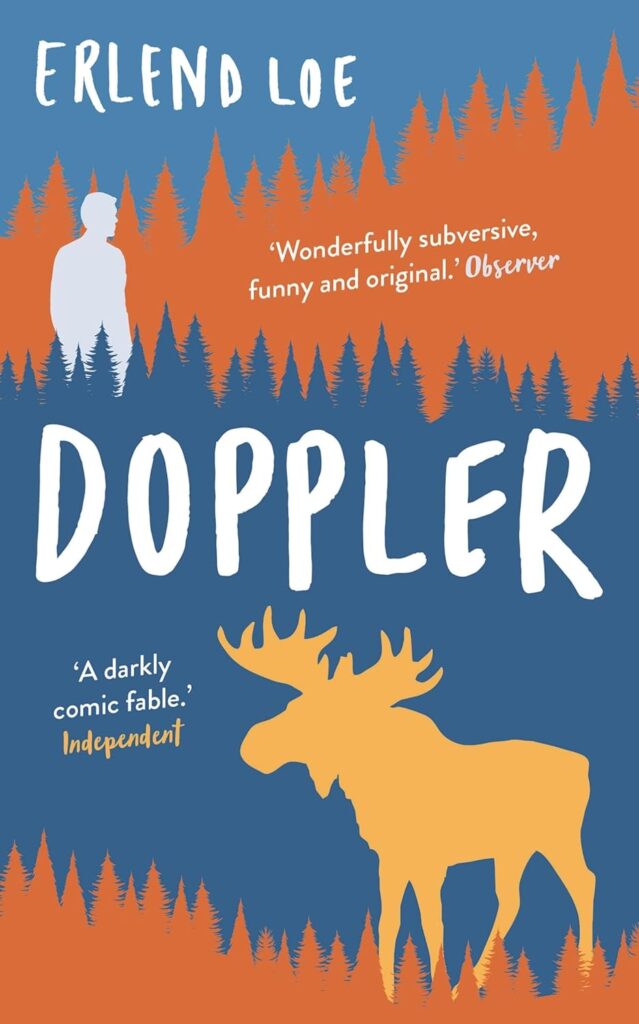
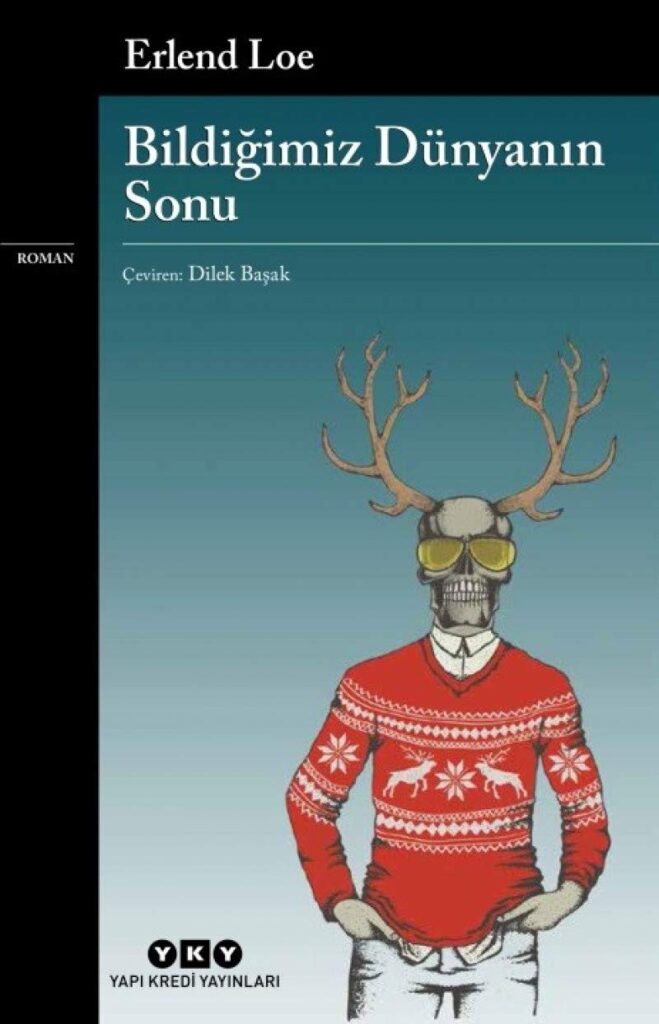
With that in mind, I sat down to write my first post about the two most recent novels I’d finished: Doppler and The End of the World as We Know It.
While preparing this post for publication, however, I discovered something slightly embarrassing: this series doesn’t consist of two books. It consists of three.
And I somehow skipped the middle one.
For the entire time I was reading, I assumed the gaps between the two novels I’d read were either intentional or the result of a significant time jump that the author simply didn’t care to explain. Looking back, I feel a little foolish admitting this, but what’s done is done.
So I’m publishing this piece as it is. Once I finish the novel I’m currently reading, I’ll go back and read Volvo Trucks. Whether I’ll write a separate post about it or come back and update this one, I honestly don’t know yet.
Anyway, the story begins like this…
Doppler Was Right — But In the End, He Was Wrong
When I first read Doppler, I found myself agreeing with the protagonist as often as I was frustrated by him. This man, who retreats to the forests outside Oslo and builds a primitive, irresponsible life for himself, is both admirable and infuriating. Courageous and cowardly. Honest and deeply selfish.
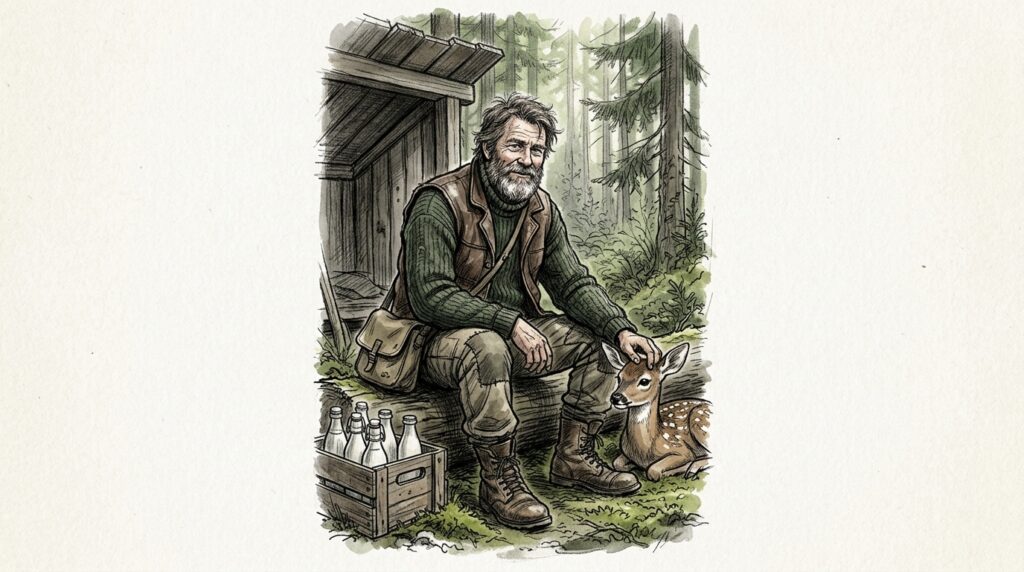
To survive in the wilderness, Doppler hunts a moose. He then takes in the moose’s orphaned calf—Bongo—and an odd but strangely wholesome friendship develops between them.
Bongo doesn’t talk. He doesn’t offer opinions. He doesn’t expect anything.
Doppler talks to him constantly, but of course he isn’t really talking to Bongo. He’s talking to himself. For the first time in years, he is forced to listen to a voice he had buried beneath work, family obligations, and the endless noise of modern life.
At one point, Doppler decides to build a monument in the forest. Loe doesn’t spend much time on this moment, but I think it’s one of the most important scenes in the book.
Because even a man who rejects civilization still carries one of civilization’s oldest instincts: the desire to leave something behind.
It’s not that different from prehistoric humans pressing their hands against cave walls. (Or a modern human who writes a blog as a memory)
“I was here.”
“I existed.”
Doppler chooses the forest, but he doesn’t choose oblivion.
For me, that’s the central contradiction of the novel.
We want to escape.
We just don’t want to disappear.
Later, Doppler meets an elderly man who lost his wife at a young age and spends some time living in his house. The old man has dedicated his life to a single project: recreating, in miniature, the exact moment his father was shot during World War II.
Every ounce of his time, energy, and attention goes into this model.
That made me wonder.
What is this project, really?
A memorial?
A form of grief?
Or simply the only thing keeping his life anchored to meaning?
And what does Doppler make of him? A man who fled a life he considered meaningless now finds himself face to face with someone who has concentrated his entire search for meaning into a scale model.
Loe never answers the question.
He simply leaves it there.
In the next novel, Doppler returns home and finds something he didn’t expect: a family that has moved on without him.
His children barely know him anymore. Another man has stepped into the role he abandoned.
And suddenly he feels jealous.
Only after losing something does he realize he never wanted to lose it.
Through a series of manipulations and schemes, he manages to reclaim his place at home. But then comes the obvious question:
Now what?
He still doesn’t want to work.
He still doesn’t want an office job.
Around this time he befriends a burglar who breaks into his house. This feels very characteristic of Loe. Doppler’s most meaningful relationships are always with people outside normal social structures: Bongo, the old man, the burglar.
It’s almost as if genuine connection becomes possible only after social roles are stripped away.
Naturally, this doesn’t last either.
This time Doppler decides that freedom means freedom from possessions. He burns everything in the house.
His wife throws him out.
Then comes Denmark.
Bongo is still with him.
First there’s cooking. Then an entirely different world involving people who sell their bodies for money and record it on camera. A world where moral boundaries blur and nobody seems accountable to anyone else.
And then, after two years, he gets tired of that too.
He wants to go back.
He wants to be a husband. A father. An employee. A functioning member of society.
In other words, he wants the very thing he originally ran away from.
I think that’s where Loe’s point becomes clear.
Doppler’s story isn’t really about escape.
It’s about recognition.
He only learns what he truly needs after losing it and after trying on several versions of the wrong life.
The forest and Denmark are really just mirrors.
And in both places, he ends up seeing the same thing: not what he is, but what he wants to be.
I can’t fully identify with Doppler.
He abandoned his family.
That’s something I can’t understand and probably never will.
But I’m no longer angry with him.
Sometimes people only discover themselves after losing everything, whether they intended to or not.
His family doesn’t take him back.
And honestly, I think they’re right. I hope Bongo does.